



New
A Disciplined XAUUSD Trading System: What Kept Me Alive in the Gold Market
I blew up 3 XAUUSD accounts in just 9 months.
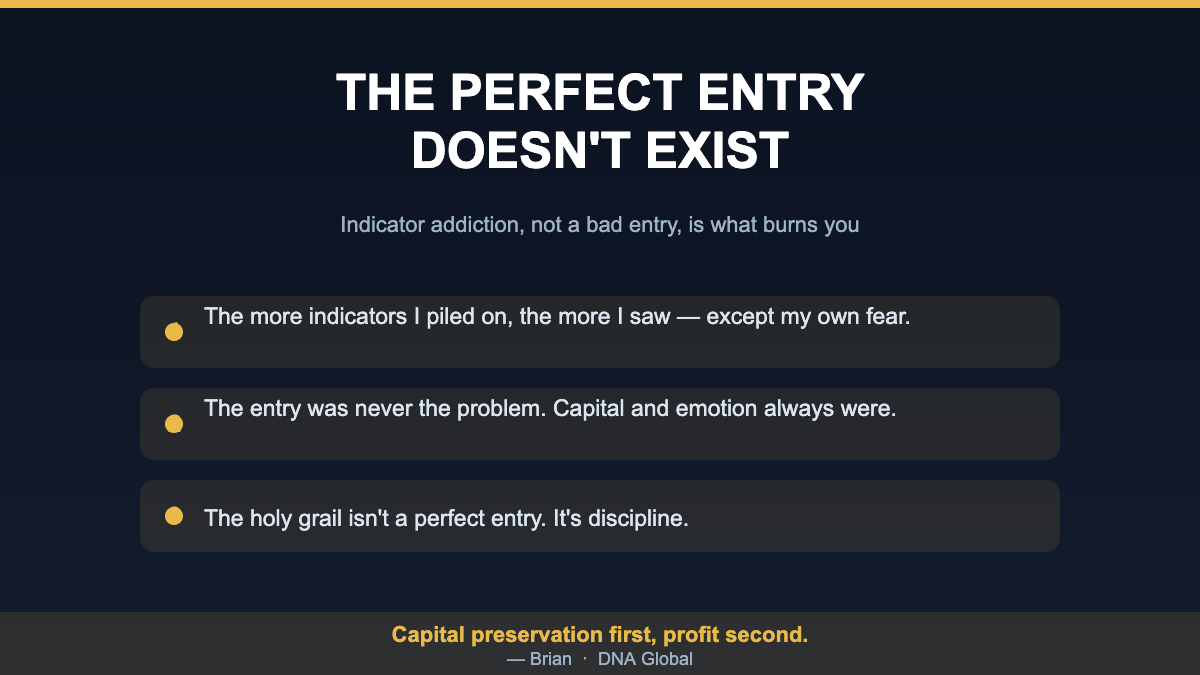
Not because my entries were wrong — but because 90% of my decisions came from emotion.
Gold ticked one way, and my heart beat with every tick.
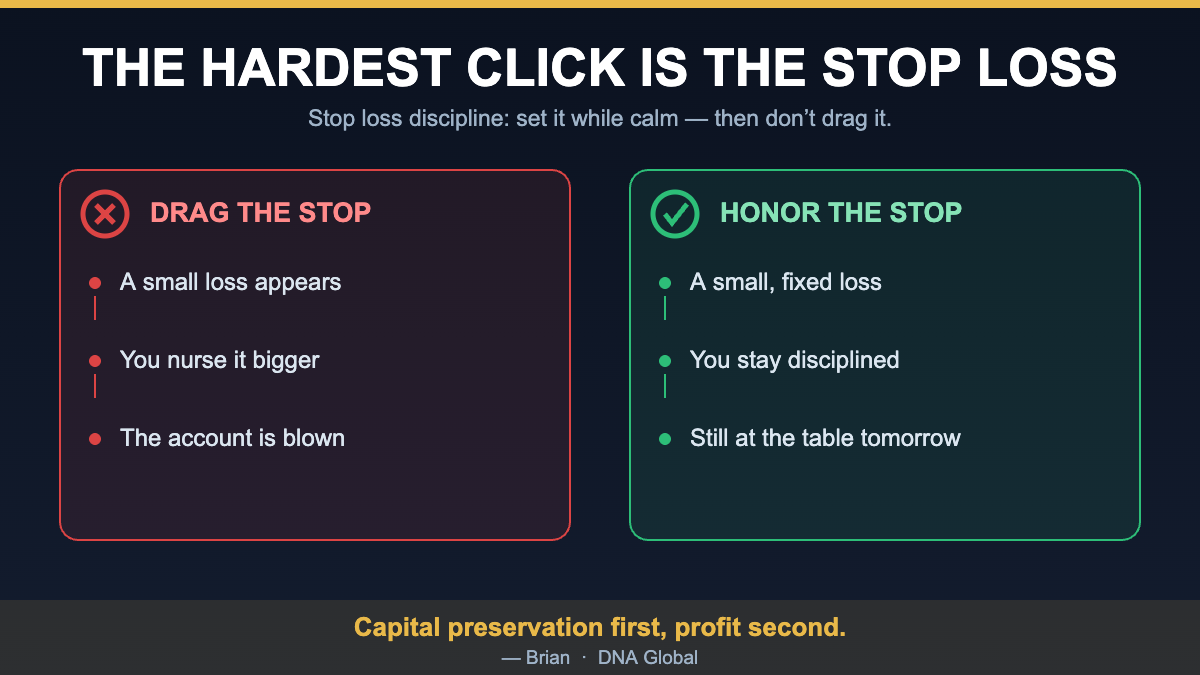
Price went against me, and I dragged my stop loss “to give it room to breathe.”
Price went my way, and I closed too early, afraid of losing the profit I already had.
On any night I still held a position, I slept with my phone glowing beside the pillow.
Sound familiar?
If you’re nodding, this article is for you — not to sell you a “hot tip,” but to tell you about the one thing that kept me alive in the gold market.
A disciplined trading system.
The real enemy isn’t gold
Many traders believe their enemy is the market. The U.S. news. The “sharks” hunting their stop losses. That engulfing candle that shows up the moment they enter.
But after 3 blown accounts, I realized a far harder truth. The real enemy is the moment you click “Buy” without knowing where you’ll get out.
XAUUSD is one of the most volatile pairs there is. It can run 200 to 300 pips in a single news session.
That volatility doesn’t care whether you’re right or wrong. It only exposes whether you have a system or not.
And here’s something few people say out loud: the business model of many brokers thrives when you deposit and blow up fast, so you deposit again. The more you trade on emotion, the faster that wheel spins. A disciplined system is how you step off that wheel.
What a system is — and what it isn’t
A system is not a secret indicator. It’s not a “sure-thing” bot. It’s not a signal group you copy blindly.
A system is a set of rules you write down before the market opens, while your head is still cool. So that when gold starts dancing and emotion rises, you don’t have to invent a decision on the spot. You simply follow what you already agreed to.
I boil my XAUUSD system down to 6 pillars.
1. Sessions — only trade when gold has a reason to move
Gold has dead hours and living hours. I focus only on the London and New York sessions, where liquidity is thick enough. Outside that window, I switch the screen off. Most of my worst trades back then happened at 2 p.m. out of boredom, when I entered “just because.”
2. Fixed risk — the most important number
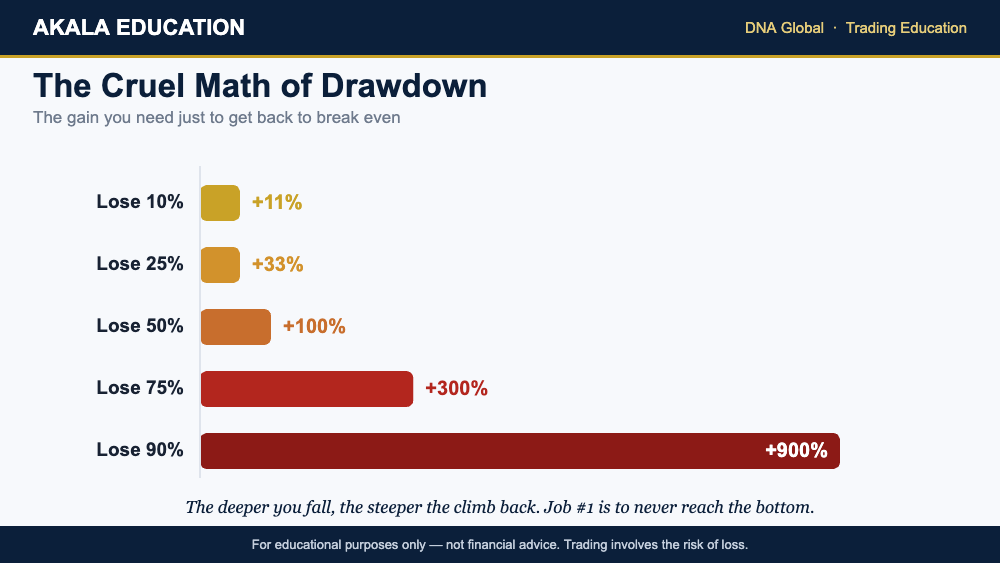
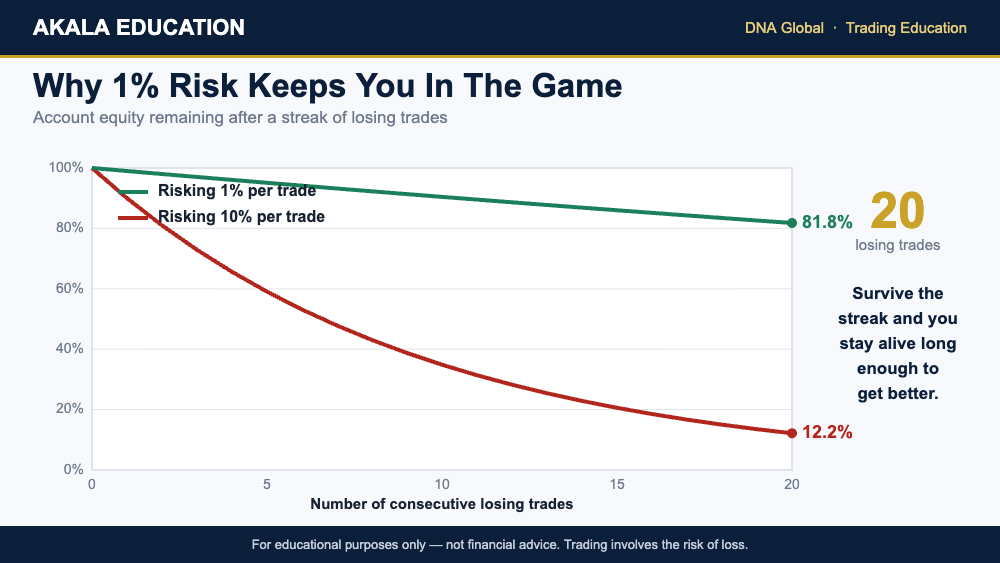
On each trade, I accept a maximum loss of 1% of the account. One percent. That means I can be wrong 20 times in a row and still have about 80% of my capital to keep playing.
Traders rarely blow up because they’re wrong often. They blow up because of one wrong trade they oversized.
3. Reward-to-risk — every trade must be worth it
I don’t enter unless the potential reward is at least 2 times the risk. A minimum R:R of 1:2. With that ratio, I only need to be right on 4 out of 10 trades for the account to grow. You don’t need to be right often. You need to be right when it pays.
4. A two-sided scenario — before you enter, not after you lose
Before each trade, I write two sentences. “If price does X, I’m right and here’s what I do.” “If price does Y, I’m wrong and here’s where I exit.”
When you already have an answer for both sides, getting stopped out is no longer an emotional shock. It’s just a scenario you already accounted for.
5. A trade journal — the mirror that can’t lie
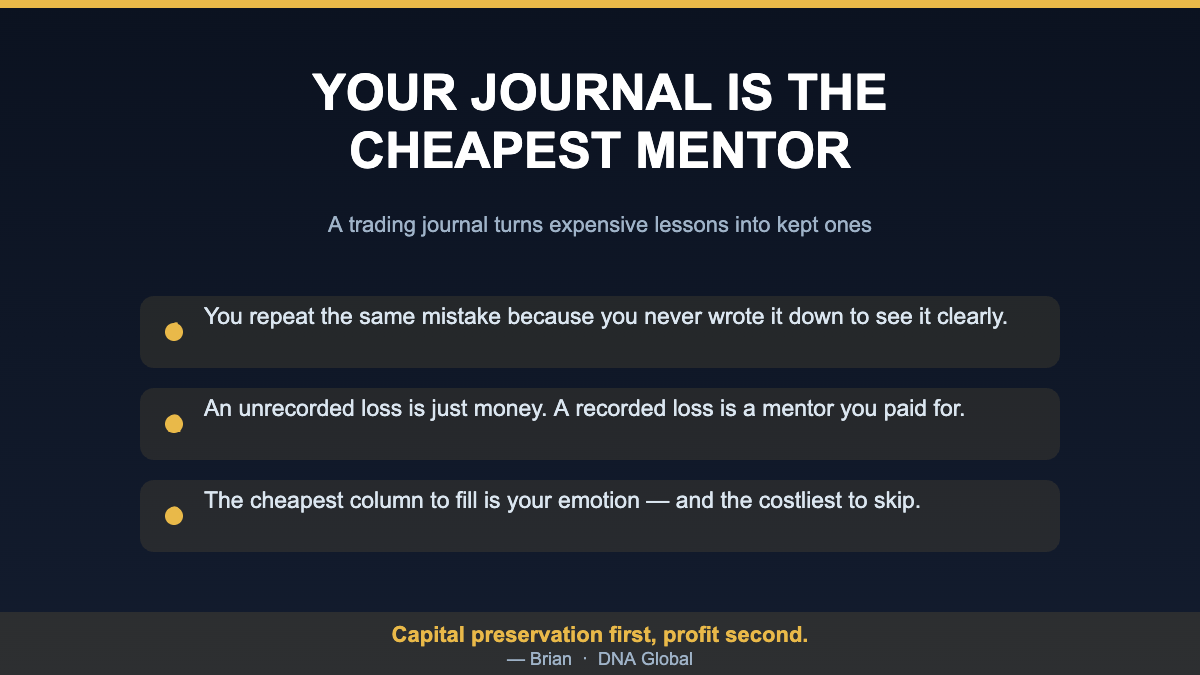
Every time a trade closes, I write 3 lines: the reason I entered, how I felt, and whether I followed the system. After 30 trades, the pattern is crystal clear. Most of my losing trades weren’t analysis errors. They were the times I broke my own rules.
6. A stop-for-the-day limit — protect yourself from your worst day
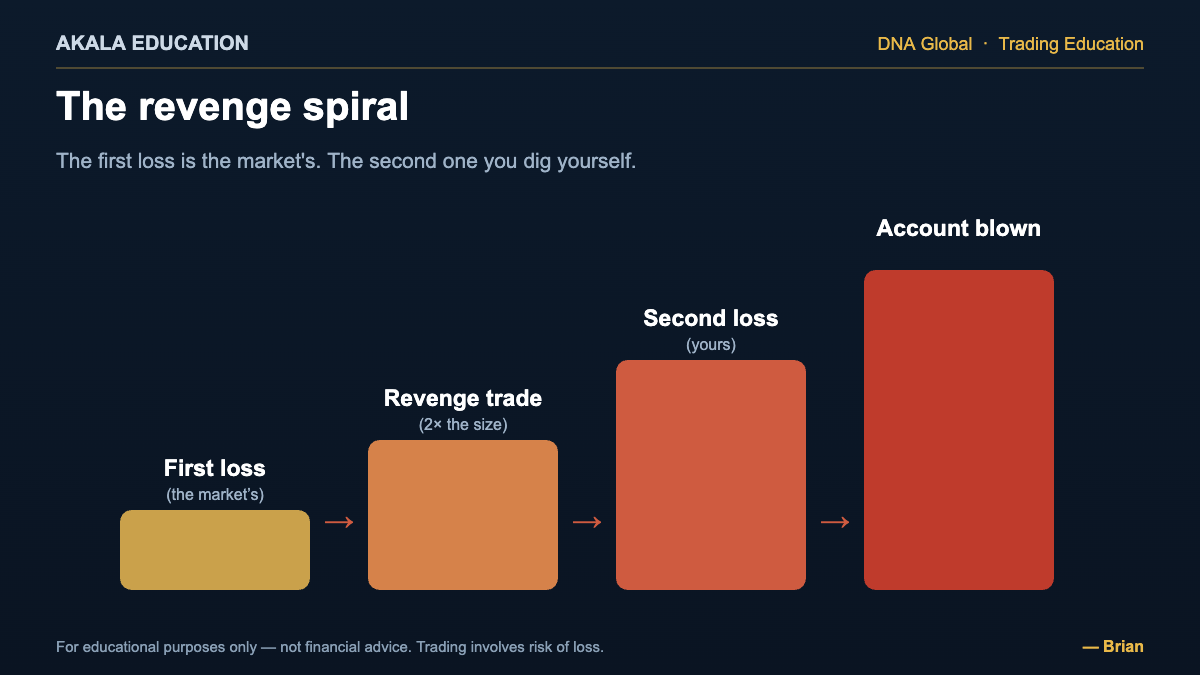
I set a ceiling: down 3% on the day means the screen goes off, no debate. This rule exists to block revenge trading — the spiral of trying to win it back that torched my very first account in a single afternoon.
From 3 blown accounts to someone still standing
I’ll be honest. In my first year, I wasn’t short on knowledge. I was short on the discipline to use it. I knew I should cut losses, but my hand still moved the stop. I knew I should be patient, but I still entered out of boredom.
The turning point wasn’t a new strategy. It was the day I sat down and wrote those 6 rules on paper. Then I made one promise. Losing while following the system is acceptable. But losing because I broke the system is not forgivable.
Six months later, my account wasn’t rich. But it was alive. And for the first time, I slept through the night with a position running. That peace, to me, is worth more than any profit number.
After years alongside fellow traders in the DNA Global community, I keep seeing the same thing. The ones who last aren’t the best analysts. They’re the ones with a system and the discipline to hold onto it when it matters most.
Where to start
You don’t need to build all 6 pillars in one night. Start with just one rule: a maximum of 1% risk per trade. That alone will visibly extend the lifespan of your account.
This week, try journaling your last 10 trades. Mark which ones followed the system and which ones broke it. You’ll see for yourself where your real enemy lives.
This community isn’t for people chasing instant tips. It’s for people willing to build a system and train their discipline. If that’s you, come learn with us in the DNA Global community — where we break down real trades for education, with no signals and no hype.
Discipline won’t make you rich overnight. It does one thing: it keeps you in the market long enough to get good. And in this game, staying alive is already a big edge.
For educational purposes only — not financial advice. Trading always carries the risk of loss; you can lose part or all of your capital.